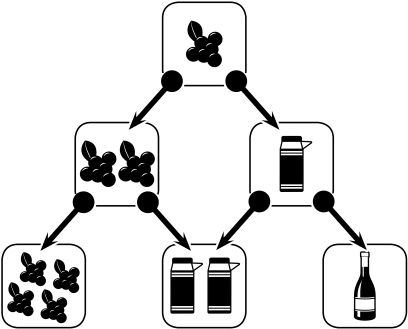
Description
During the course of the game, new Actions become available to specific players, or existing Actions are improved.
Discussion
This is similar in many ways to the meta-mechanism of Gating and Unlocking (ACT-15). New actions and abilities are introduced as the game progresses. The differences in this mechanism are subtle but important. First, these new and upgraded Actions are typically only available to a single player. It is possible that multiple players can earn the same additional Action, but it needs to happen individually. Some games allow other players to take advantage of another’s personal Actions, either by paying the owning player some fee, obtaining the ability by force or trade, or by having the owner’s monopoly on them expire after a number of turns, making them available to all. These upgrades frequently do not make entirely new Actions available to a player. Instead, they make specific Actions more efficient or powerful. Whereas Gated upgrades usually trigger on a timed or global schedule (as in Agricola’s one new Action space per turn system) in a Tech system players
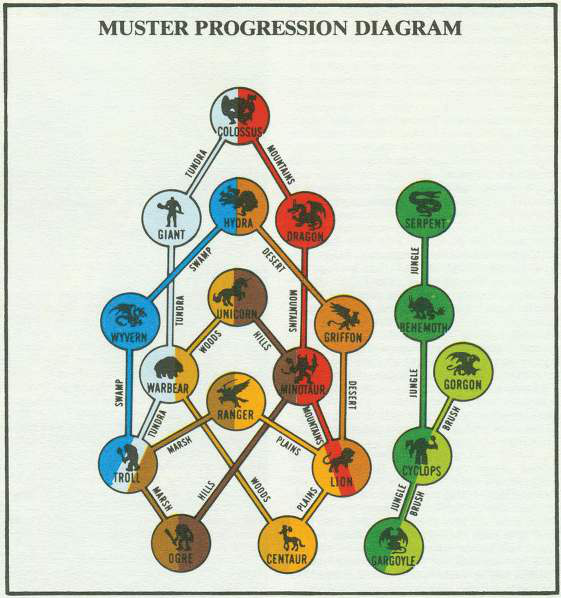
need to accumulate and spend some resources in order to gain them. This can be a general currency, such as money, as in Civilization, or a specialized “research” currency as in Eclipse or Trough the Ages: A Story of Civilization. There are games where techs are given out freely, although these still have an opportunity cost as players must forgo other choices. Technologies do not have to be themed as research to use the mechanism. In many games, hiring people or building certain structures unlock new or advanced abilities. Puerto Rico is one of many examples of this. Growing, evolving, building, and training are other common metaphors for research. Upgrades may have prerequisites that need to be satisfied or may be easier to obtain if you have an earlier tech. This results in a Tech Tree. For example, in Stellar Conquest, if you have researched Industrial Technology, it is less costly to then obtain Robotic Industry. Tech Trees may also be expressed as Tracks. As players advance their markers along one or more tracks, they may pass certain spaces, which gives improved actions or abilities. Orleans and Russian Railroads both utilize this mechanism. There may also be physical markers placed along these tracks so that the first player to reach those spaces gains those markers and a special bonus. Other players will still receive bonuses printed on the track. Tech Trees may be disguised thematically. In Titan, players recruit creatures into legions. The creatures that may be recruited into a legion depend on their current composition. Tree Ogres may recruit a Troll, and three Trolls may recruit a Colossus. These creatures are more and more powerful, and some have special abilities such as flying (Illustration 3.8). This type of system gives the designer fine-grained control over Actions available to players and gives a path to offer different strategic options, as players can choose which Actions and Abilities to invest in. Having a limited number of these Techs also forces player interaction and competition.
Sample Games
Agricola (Rosenberg, 2007) Civilization (Tresham, 1980) Clash of Cultures (Marcussen, 2012) Eclipse (Tahkokallio, 2011) Kemet (Bariot and Montiage, 2012) Orleans (Stockhausen, 2014) Puerto Rico (Seyfarth, 2002) Russian Railroads (Ohley and Orgler, 2013) Stellar Conquest (Tompson, 1975) Trough the Ages: A Story of Civilization (Chvátil, 2006) Titan (McAllister and Trampier, 1980) Twilight Imperium (Petersen, 1997)
Illustration 3.8 The Muster Diagram from Titan, showing which creatures may recruit other creatures. The creatures at the bottom (Ogre, Centaur, Gargoyle) are the basic ones. They may recruit creatures one level above them in the terrain type shown. The separation of the Gargoyle–Serpent tree from the other creatures creates interesting tactical and strategic options for players.

描述
在游戏过程中,特定的玩家可以使用新的动作,或者现有的动作得到改进。
讨论
这在许多方面类似于门控和解锁(ACT-15)的元机制。随着游戏的进行,引入了新的动作和能力。这种机制的差异是微妙但重要的。首先,这些新的和升级的动作通常只对单个玩家开放。多个玩家可能获得相同的额外动作,但这需要单独发生。有些游戏允许其他玩家利用他人的个人动作,或者是通过向拥有玩家支付一定的费用,通过武力或交易获得能力,或者是通过让拥有者的垄断在一定回合数后过期,使它们对所有人开放。这些升级通常不会让玩家获得全新的动作。相反,它们使特定的动作更有效或更强大。门控升级通常按时间或全局计划触发(如《农场主》每回合一个新的动作空间系统),而在科技系统中,玩家
需要积累和花费一些资源才能获得它们。这可以是通用货币,如《文明》(Civilization)中的金钱,或者是专门的“研究”货币,如《日蚀》(Eclipse)或《历史巨轮》中的那样。有些游戏的科技是免费发放的,尽管这些仍然有机会成本,因为玩家必须放弃其他选择。为了使用这种机制,技术不一定必须以研究为主题。在许多游戏中,雇用人员或建造某些结构解锁新的或高级的能力。《波多黎各》(Puerto Rico)是这方面众多例子之一。成长、进化、建设和训练是研究的其他常见隐喻。升级可能有需要满足的先决条件,或者如果你有早期科技,可能更容易获得。这将导致科技树(Tech Tree)。例如,在《星球征服》(Stellar Conquest)中,如果你研究了工业技术,那么获得机器人工业的成本就会降低。科技树也可以表示为科技规迹(Tracks)。当玩家沿一个或多个轨迹推进他们的标记时,他们可能会经过某些空间,这会提供改进的动作或能力。《奥尔良》(Orleans)和《俄罗斯铁路》(Russian Railroads)都利用了这种机制。也可能有物理标记放置在这些轨迹上,以便第一个到达这些空间的玩家获得这些标记和特殊奖励。其他玩家仍将收到印在轨迹上的奖励。科技树可以在主题上进行伪装。在《泰坦》(Titan)中,玩家招募生物进入军团。可以被招募进军团的生物取决于他们目前的组成。三个食人魔可以招募一个巨魔,三个巨魔可以招募一个巨像。这些生物越来越强大,有些具有特殊能力,如飞行(插图3.8)。这种类型的系统给设计师提供了对玩家可用动作的细粒度控制,并提供了一条提供不同战略选择的途径,因为玩家可以选择投资哪些动作和能力。拥有数量有限的这些科技也迫使玩家互动和竞争。
游戏范例
Agricola (Rosenberg, 2007) - 《农场主》 Civilization (Tresham, 1980) - 《文明》 Clash of Cultures (Marcussen, 2012) - 《文明冲突》 Eclipse (Tahkokallio, 2011) - 《日蚀》 Kemet (Bariot and Montiage, 2012) - 《凯麦特》 Orleans (Stockhausen, 2014) - 《奥尔良》 Puerto Rico (Seyfarth, 2002) - 《波多黎各》 Russian Railroads (Ohley and Orgler, 2013) - 《俄罗斯铁路》 Stellar Conquest (Tompson, 1975) - 《星球征服》 Trough the Ages: A Story of Civilization (Chvátil, 2006) - 《历史巨轮》 Titan (McAllister and Trampier, 1980) - 《泰坦》 Twilight Imperium (Petersen, 1997) - 《帝国的曙光》
插图 3.8 《泰坦》中的集合图,显示哪些生物可以招募其他生物。底部的生物(食人魔、半人马、石像鬼)是基础生物。它们可以在所示的地形类型中招募高一级别的生物。石像鬼-海蛇树与其他生物的分离为玩家创造了有趣的战术和战略选择。