Description
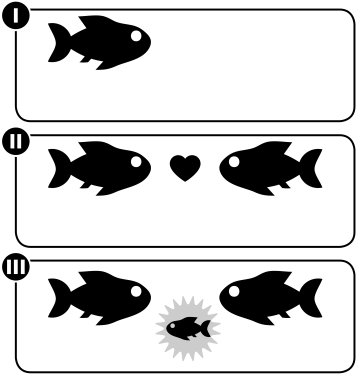
Resources held by a player will automatically grow over time.
Discussion
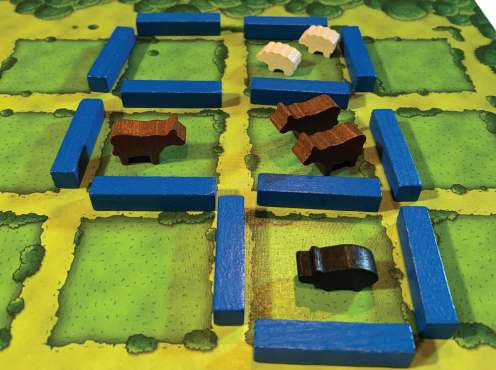
In the purest form of this mechanism, one or more resources increases by a set amount (usually one) each turn. This allows the designer to gradually ramp up player power in a simple and intuitive manner. A popular example of this is in the digital card game Hearthstone. The resource Mana is used to play cards. The Mana available at each turn begins the game at one and is increased by one at each turn until it reaches a maximum of ten. This gives the game an arc, as the options are much more restricted at low Mana values, and complexity and combos are gradually introduced. It also encourages players to balance their decks. If they only select cards with high Mana values, they will not be able to play for several turns. But if they only select low Mana cards, they may run out of cards quickly as they play multiple cards per turn later in the game (Illustration 7.3). A variant on this system has unused resources grow. Tematically, this can be expressed as bank interest or as breeding animals. Agricola uses the latter option. If a player has two or more of the same type of animal, they gain an
additional one. This encourages efficiency and can force players into deciding the value of using resources now, versus having more for later. Civilization uses a similar system for population growth. At the start of each turn, each area that has a single token gains one more, and those that have two or more tokens gain two more. Setting up to properly manage this population growth is an important part of Civilization strategy.
Sample Games
Agricola (Rosenberg, 2007) Civilization (Treshem, 1980) Hearthstone (Donais and Sakomoto, 2014) Illustration 7.3 Agricola player board. If there are two or more of a given type of animal, one more is added. So in this example, one more sheep (white) and cow (brown) will be added. The lone pig (black) does not create an additional pig.
描述
玩家持有的资源会随着时间的推移自动增长。
讨论
在这种机制的最纯粹形式中,一种或多种资源每回合增加固定数量(通常为一)。这允许设计师以简单直观的方式逐渐提升玩家力量。这方面的一个流行例子是在数字卡牌游戏《炉石传说》(Hearthstone)中。资源法力值(Mana)用于打出卡牌。每回合可用的法力值在游戏开始时为一,每回合增加一,直到达到最大值十。这给了游戏一个弧度,因为在低法力值时选项更加受限,并且逐渐引入复杂性和组合。这也鼓励玩家平衡他们的牌组。如果他们只选择高法力值的卡牌,他们将无法在几个回合内出牌。但如果他们只选择低法力值卡牌,由于在游戏后期每回合打出多张卡牌,他们可能会很快用完卡牌(插图7.3)。该系统的一个变体是未使用的资源会增长。在主题上,这可以表现为银行利息或繁殖动物。《农场主》(Agricola)使用后一种选择。如果玩家拥有两只或更多相同类型的动物,他们会获得
额外的一只。这鼓励效率,并迫使玩家决定现在使用资源的价值,还是为了以后拥有更多。 《Civilization》使用类似的系统进行人口增长。在每一回合开始时,每个拥有单一标记的区域获得一个,那些拥有两个或更多标记的区域获得两个。设置以正确管理这种人口增长是《Civilization》策略的重要组成部分。
游戏范例
Agricola (Rosenberg, 2007) - 《农场主》 Civilization (Treshem, 1980) - 《Civilization》 Hearthstone (Donais and Sakomoto, 2014) - 《炉石传说》 插图7.3 《农场主》玩家版图。如果给定类型的动物有两只或更多,则添加一只。所以在这个例子中,将添加一只羊(白色)和一只牛(棕色)。那只猪(黑色)不会产生额外的猪。