Description
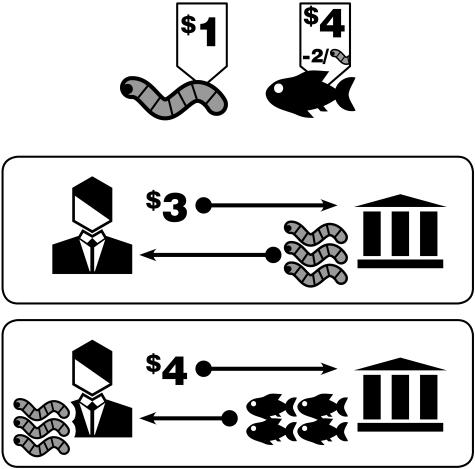
A player can obtain an asset at a reduced cost.
Discussion
In the typical implementation of this mechanism, players accumulate Discounts that make future purchases less expensive, these Discounts persist, and they stack (build on each other). These characteristics make this mechanism well suited to create an engine-building effect, where players are able to achieve more as the game continues. In Splendor, for example, cards are obtained by cashing in gems (ECO01). Many of these cards Discount all future purchases by one or more gems. As the game progresses, it becomes easier for players to obtain more expensive cards, as they need fewer gems once they take the discounts into effect. 7 Wonders takes Discounts to an extreme by allowing players to acquire a card at no cost if they have the prerequisite building. This is distinct from an Upgrade mechanism (ECO-11), as the original card is retained. It is not
converted into a new building—it merely allows for its acquisition at no cost. However, these Discounts are not fungible. Tey only apply to the single building specified on the card. One of the earliest examples of Discounting is Civilization. Technology advances (called Civilization cards) gives players Discounts toward a specific category of Civilization card, usually the same category as the card itself. For example, Music, which costs 20 and is in the Art category, gives a 10 Discount toward any future purchases in Art for the rest of the game. This encourages players to specialize in certain areas. It also helps to create a Technology Tree (ACT-16) without actually defining any prerequisites, by having the most advanced cards be so expensive that they realistically can only be obtained through Discounts.
Sample Games
7 Wonders (Bauza, 2010) Civilization (Tresham, 1980) Splendor (André, 2014)
描述
玩家可以以降低的成本获得资产。
讨论
在该机制的典型实现中,玩家积累使未来购买更便宜的折扣(Discounts),这些折扣持久存在,并且它们可以叠加(彼此建立)。这些特征使该机制非常适合产生引擎构建效果,即随着游戏的继续,玩家能够实现更多目标。例如,在《璀璨宝石》(Splendor)中,卡牌是通过兑换宝石(ECO-01)获得的。其中许多卡牌会使所有未来的购买减少一个或多个宝石的成本。随着游戏的进行,玩家更容易获得更昂贵的卡牌,因为一旦折扣生效,他们需要的宝石就更少了。《七大奇迹》(7 Wonders)将折扣推向极致,如果玩家拥有先决条件建筑,就可以免费获得一张卡牌。这与升级机制(ECO-11)不同,因为保留了原始卡牌。它没有
转换为新建筑——它只是允许免费获得其获取。然而,这些折扣是不可替代的。它们仅适用于卡牌上指定的单一建筑。折扣的最早例子之一是《Civilization》。技术进步(称为文明卡)给予玩家针对特定类别文明卡的折扣,通常与卡牌本身的类别相同。例如,音乐(Music),成本为20且属于艺术类,为游戏剩余时间内的任何艺术类未来购买提供10的折扣。这鼓励玩家专注于某些领域。它还有助于创建一个没有任何先决条件的科技树(ACT-16),方法是让最高级的卡牌变得非常昂贵,以至于实际上只能通过折扣获得。
游戏范例
7 Wonders (Bauza, 2010) - 《七大奇迹》 Civilization (Tresham, 1980) - 《Civilization》 Splendor (André, 2014) - 《璀璨宝石》